Nature Photo Challenge #23: Flies
The theme of the previous challenge was “Tree Bark” and I closed with some pictures of holes drilled by Yellow-bellied Sapsuckers. And that gives me a great segue into this week’s challenge, because some of the insects drawn to the flowing sap were flies.

Three species of fly drawn to tree sap, with Largus succinctus.
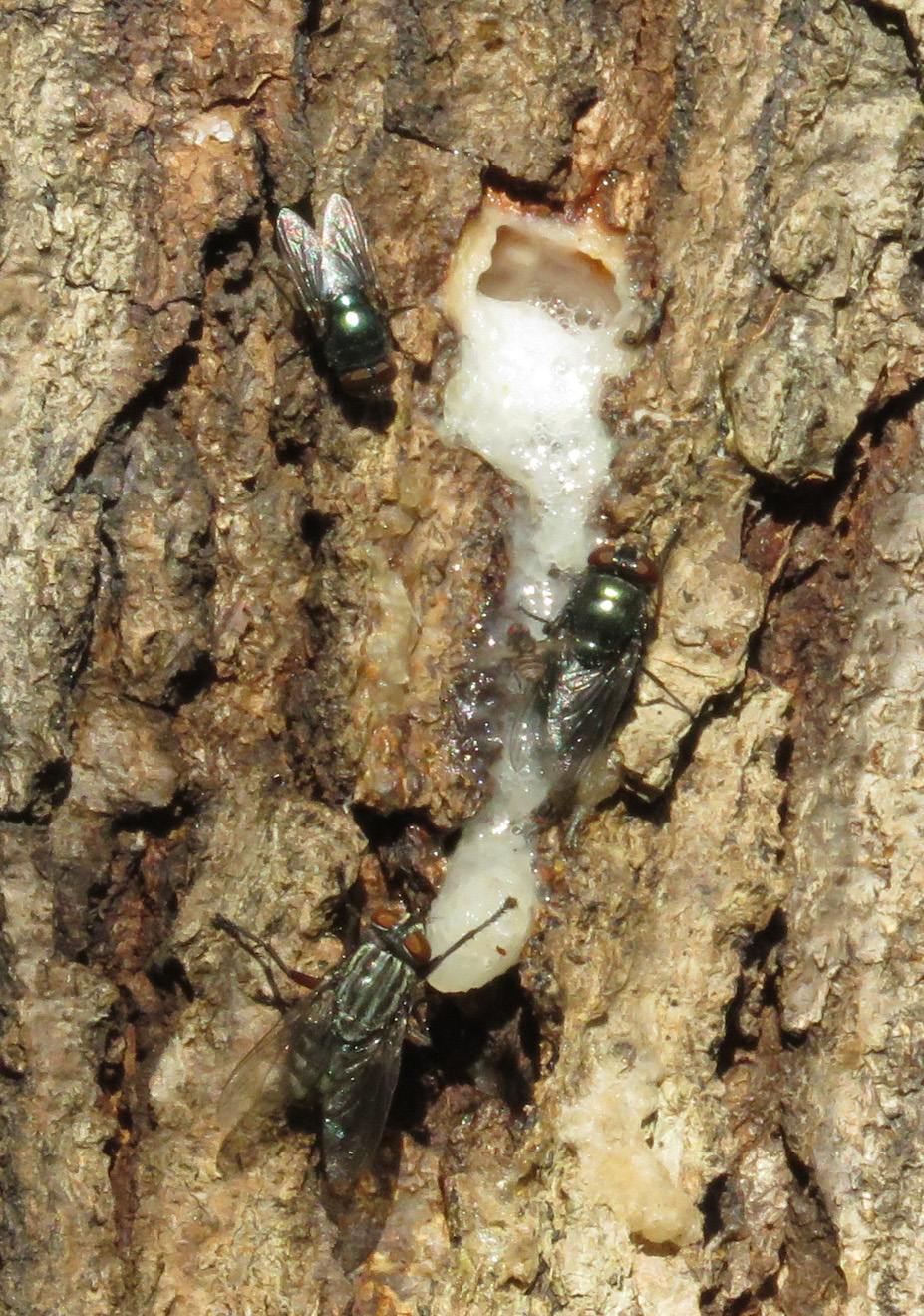
Close up of two of the fly species.
My best fly pictures are of robber flies, the family Asilidae. To me these are very obvious insects — in a field of busy bees and wasps, who are darting from plant to plant, I will notice a large “bee” who is just sitting on a leaf, studiously not doing anything. When I focus my attention on it, it seems to notice being noticed, and it will zoom off to a distant bush, hoping it is outside my zone of attention. It reminds me of the 5th grade students I used to teach — in a busy classroom, that one child who was doing “nothing” (except possibly planning some mischief — yes, Christopher, I remember you!) was like a ping on my sonar screen.
And they are just so weird-looking! This one, Southern Bee Killer, looks like it could be a World Wildlife Fund stuffed toy.
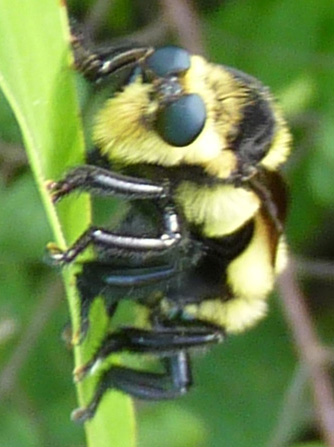
Southern Bee Killer, Mallophora orcina.

Southern Bee-killers, making sure their species continues.
You can click on the pictures to see larger images.
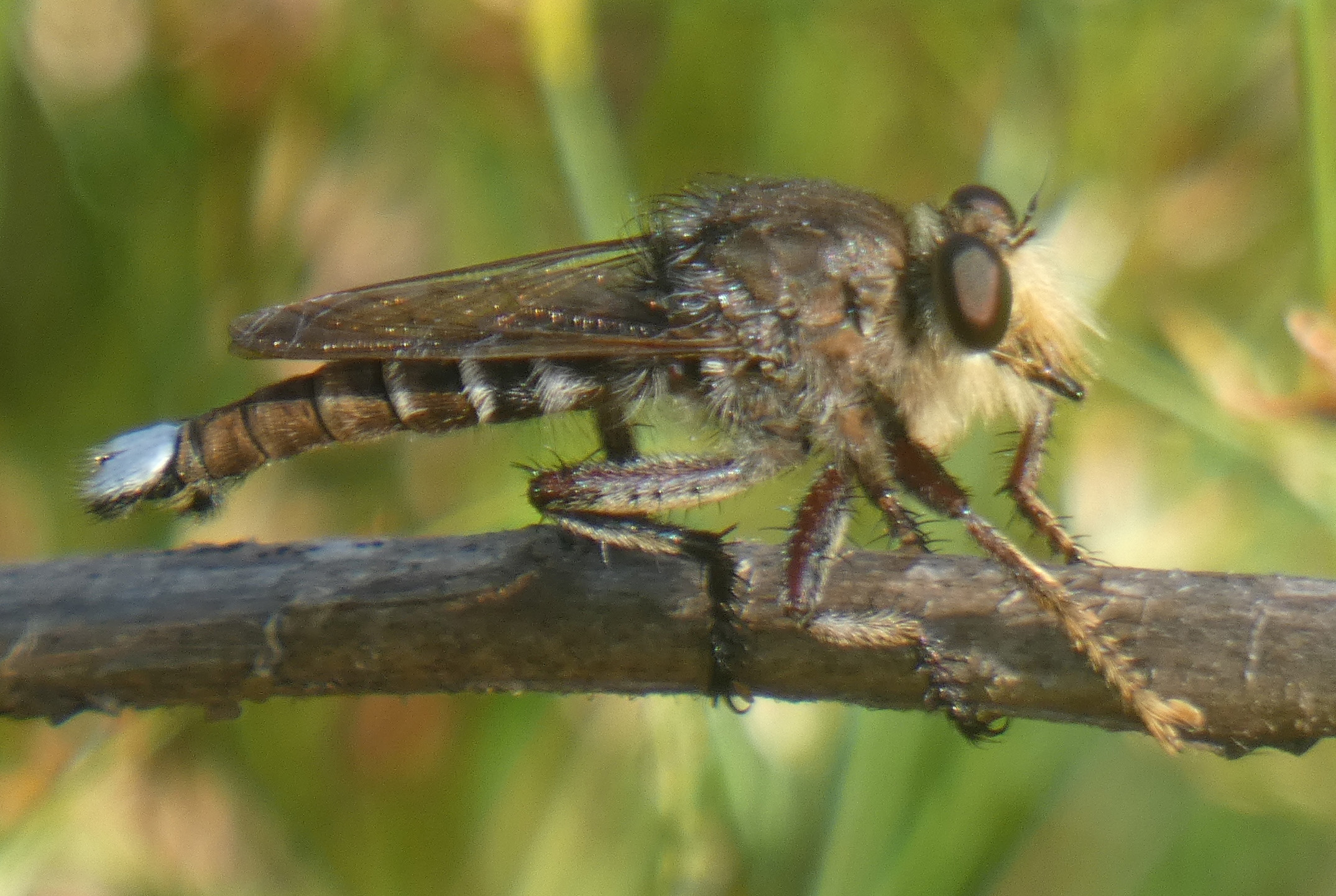
Promachus bastardii
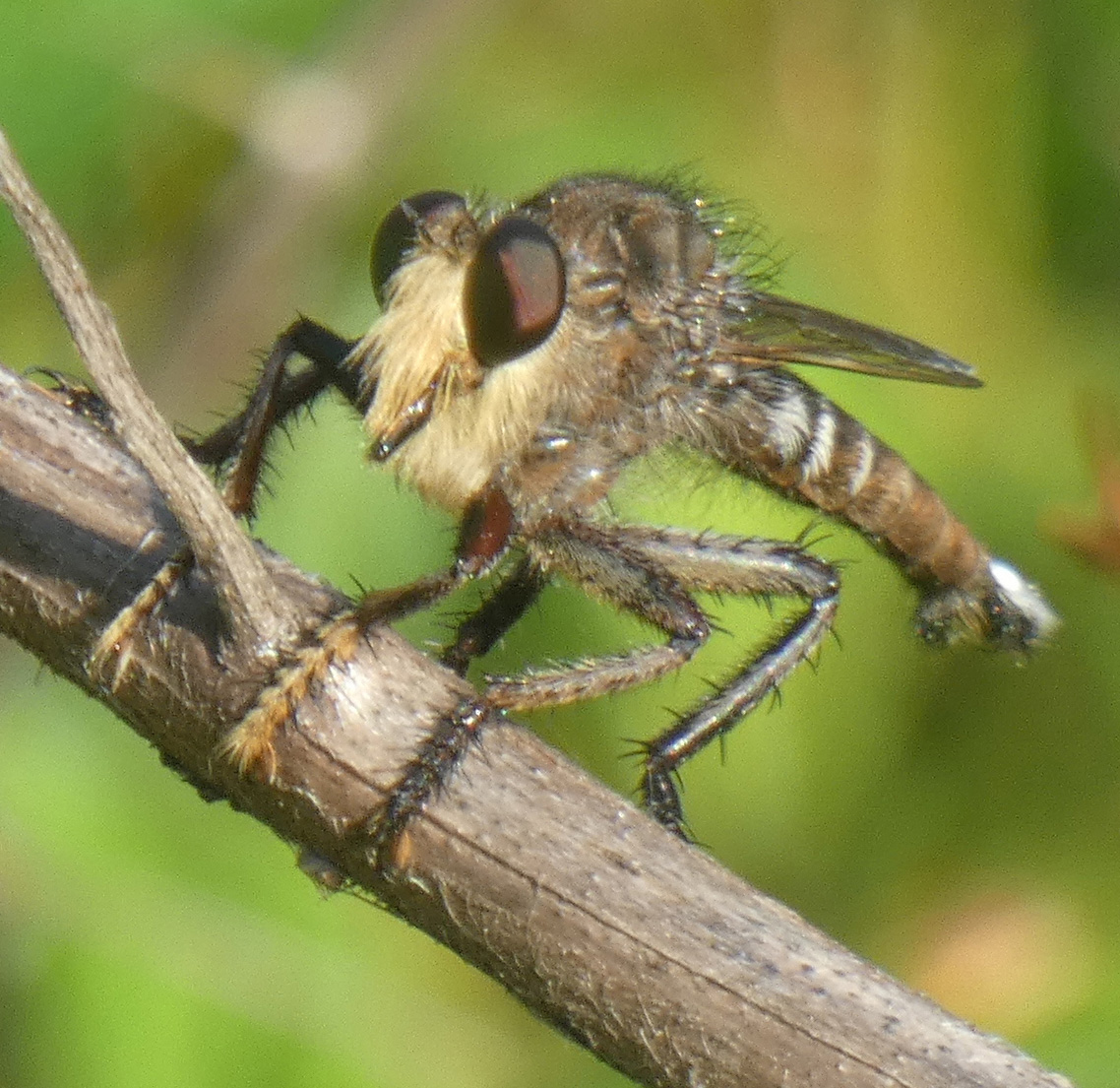
Promachus bastardii, showing the robber fly common features of “bearded” face and the dip between the two large eyes.
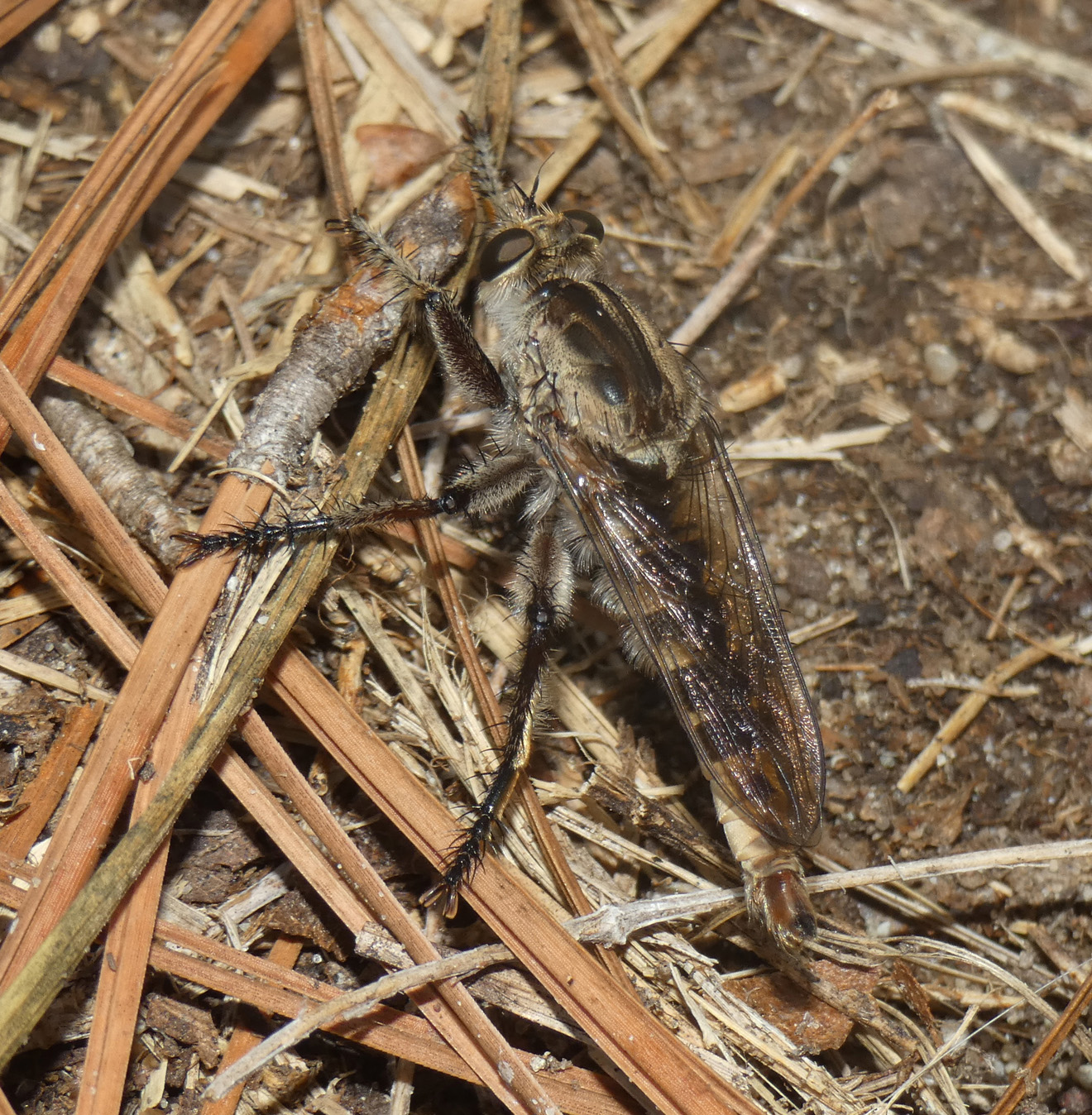
Triorla interrupta

Hanging-thieves, genus Diogmites. Often they use their two front legs to hang down from twigs.
This next one is small; when I saw it this week, I thought it was a wasp. If I wasn’t already familiar with robber flies, I might not have noticed it.
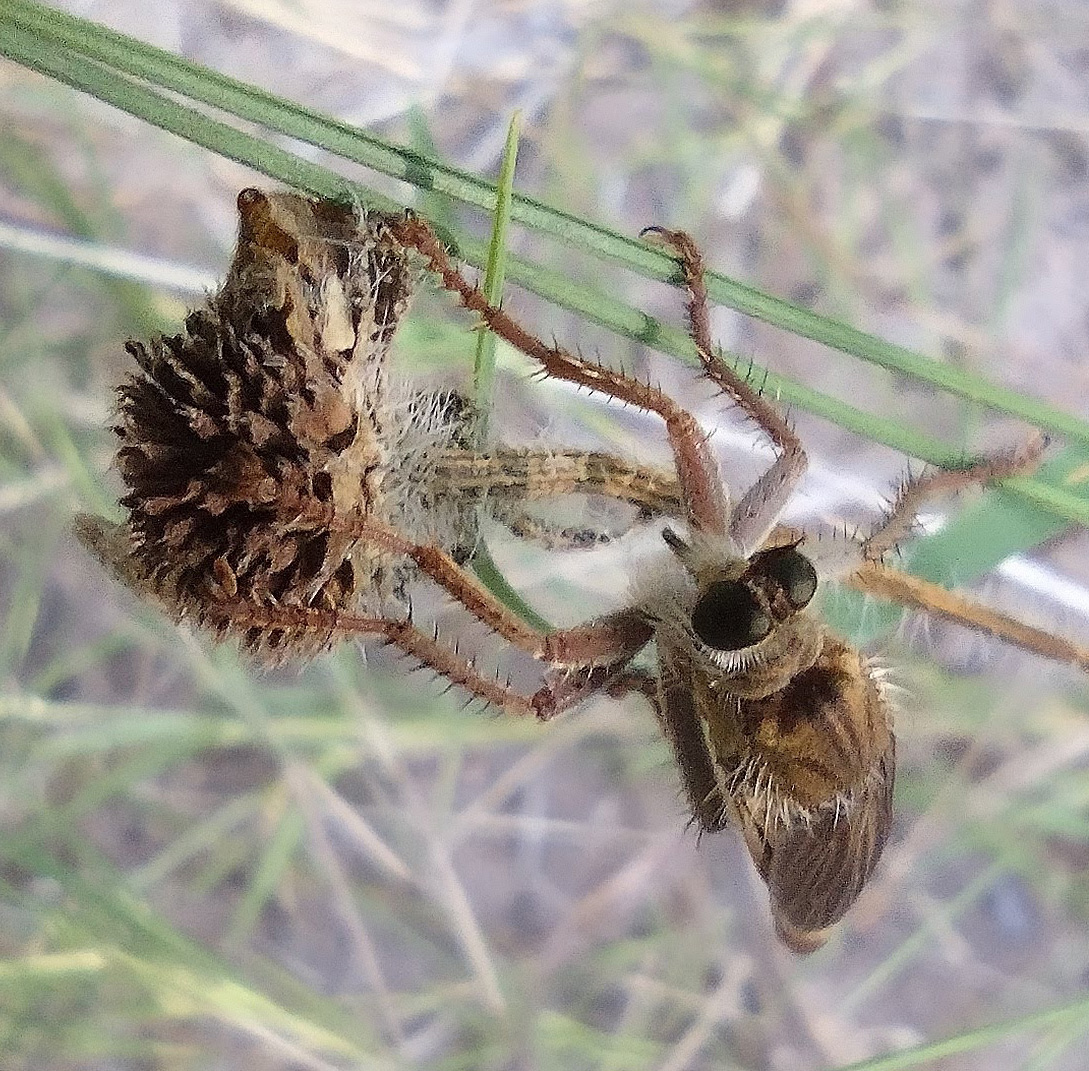
Tribe Stenopogonini. This one is very small, about an inch long.
I have seen robber flies swoop off their leaves, grab some large insect, and feast. They pierce the prey and suck out the insides. When they are occupied with this, I can get close and take lots of pictures. (One of my insect books points out that their beaklike mouthparts can deliver a painful sting to humans who are trying to handle them.)
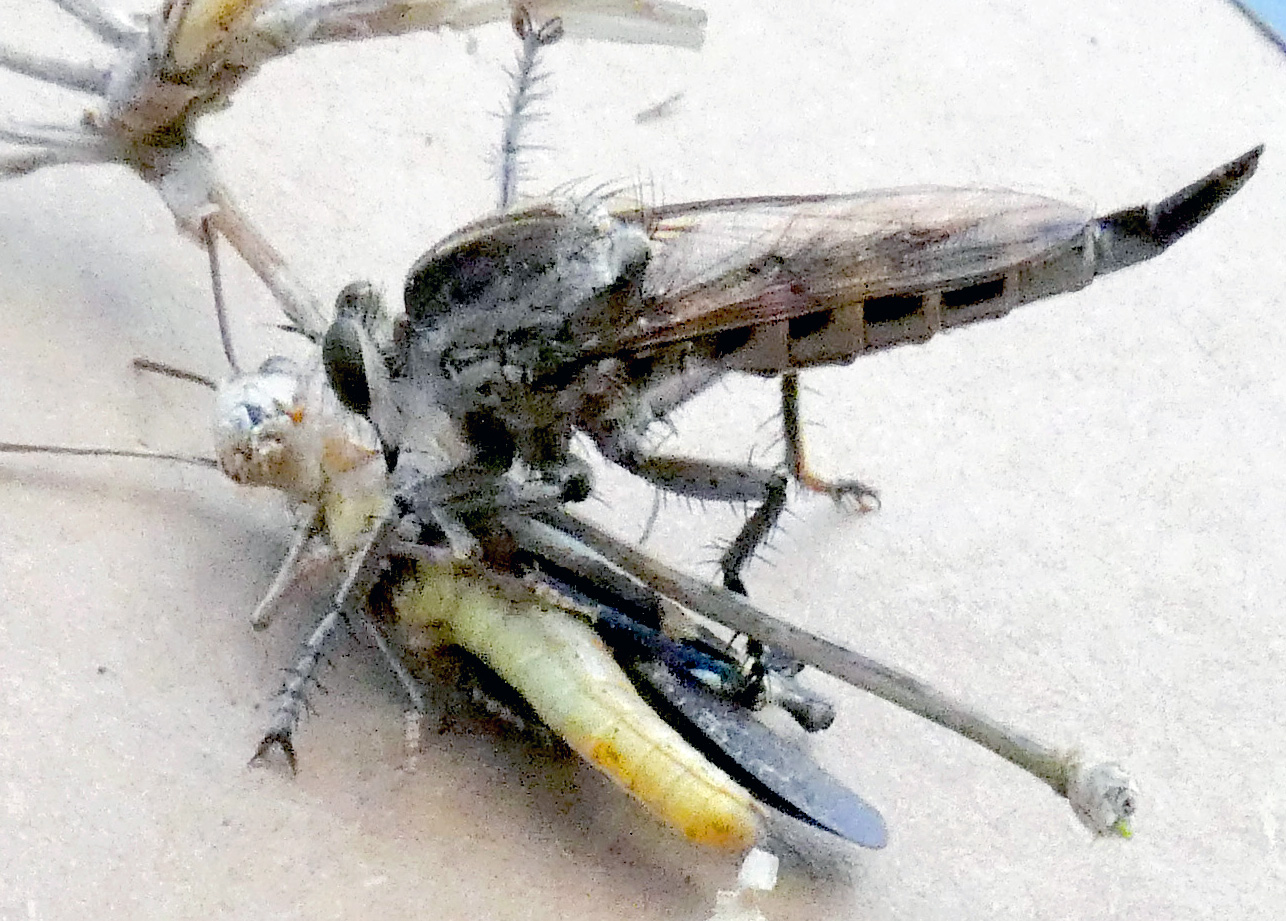
A Promachus taking out a grasshopper.

No honor among thieves! The predator is Genus Proctacanthus; the prey is Promachus hinei.
I like this picture of a Laphria saffrana, because with its wing extended, you can see the fat yellow body. If I were ever in a motorcycle gang, I would design my outfit based on this fly. Who would not want a fuzzy yellow outfit with a big black skull on the back?

Laphria saffrana

Laphria saffrana
I have seen at least eight species of robber fly here on our farm. The Kaufman Field Guide to Insects of North America says there are close to 1000 species in North America. But in iNaturalist, there are not as many observations of them as I would expect. As of this writing, Procanthus brevipennis has only 521, the skull-backed Laphria saffrana has only 474, and the fuzzy Southern Bee-Killer has only 408.
So that is one reason I chose to focus on robber flies here — they might be less familiar to people. The other reason is that my photos of other types of flies are not that great — if you want to see amazing, sharp pictures that bring out the beauty of flies, please go to the host page for this challenge, at Denzil Nature! And then scroll down to the comments and see what other bloggers have to say about these insects. 🙂


They are like fighter jets of the fly world. 🙂
Oh, that’s an awesome comparison! The Kaufman insect guide said they were comparable to falcons, but I like yours better. 🙂
Thank you for this very detailed article about robber flies, something I didn’t even know existed. If it were me, I’d be posting pictures of common houseflies. You go above and beyond. Thanks for educating me.
The robber flies stay still longer than houseflies. 🙂 I bet you will start noticing them now!
Sadly I haven’t seen Robber Flies around here for quite a number of years now. They used to be here all the time when I first started to clear the land and build. I saw a Robber Fly whizz past me and catch a Mud Dauber Wasp on the wing. Most impressive 🙂
I wonder why they have moved away — maybe they will be back eventually!
Lots of changes environmentally too. Birds were a bit rare until I planted gardens. So maybe me increasing the birds around here has made them move further away.
Thank you for such an informative and well illustrated post! I learned so much from you.
Thank you!
I have not been able to find much on robber flies in the insect books I own, but it has been fun learning about them from observation, something I am not usually patient enough to do. 🙂
Pingback: Creative Juice #356 | ARHtistic License
Pingback: Your photos of flies – Denzil Nature
Pingback: Take a Good Look: The Numbers Game — July 11, 2024 | Little Wild Streak