Just Some Pretty Pictures

White-striped Longtail on zinnia.
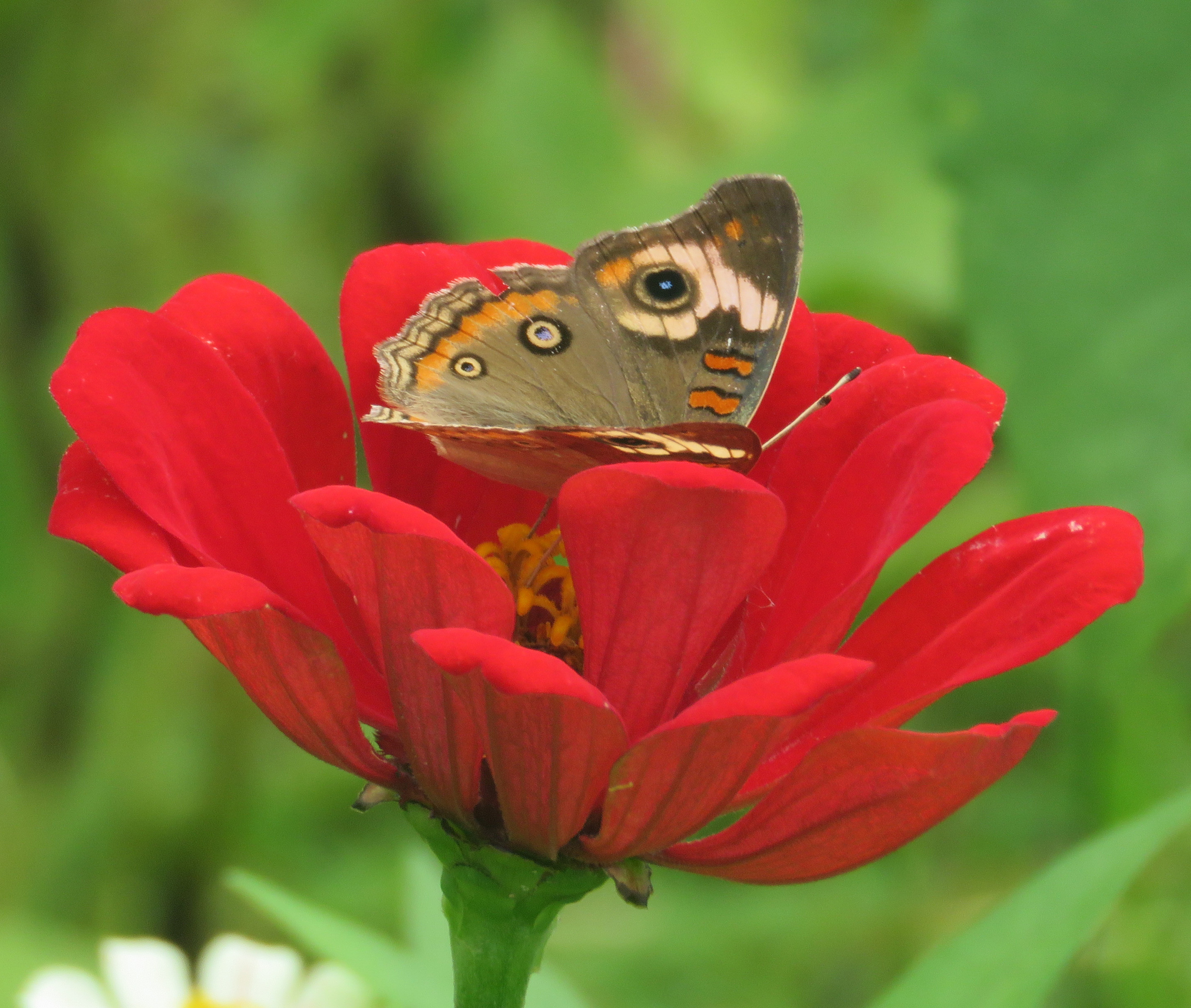
Buckeye.
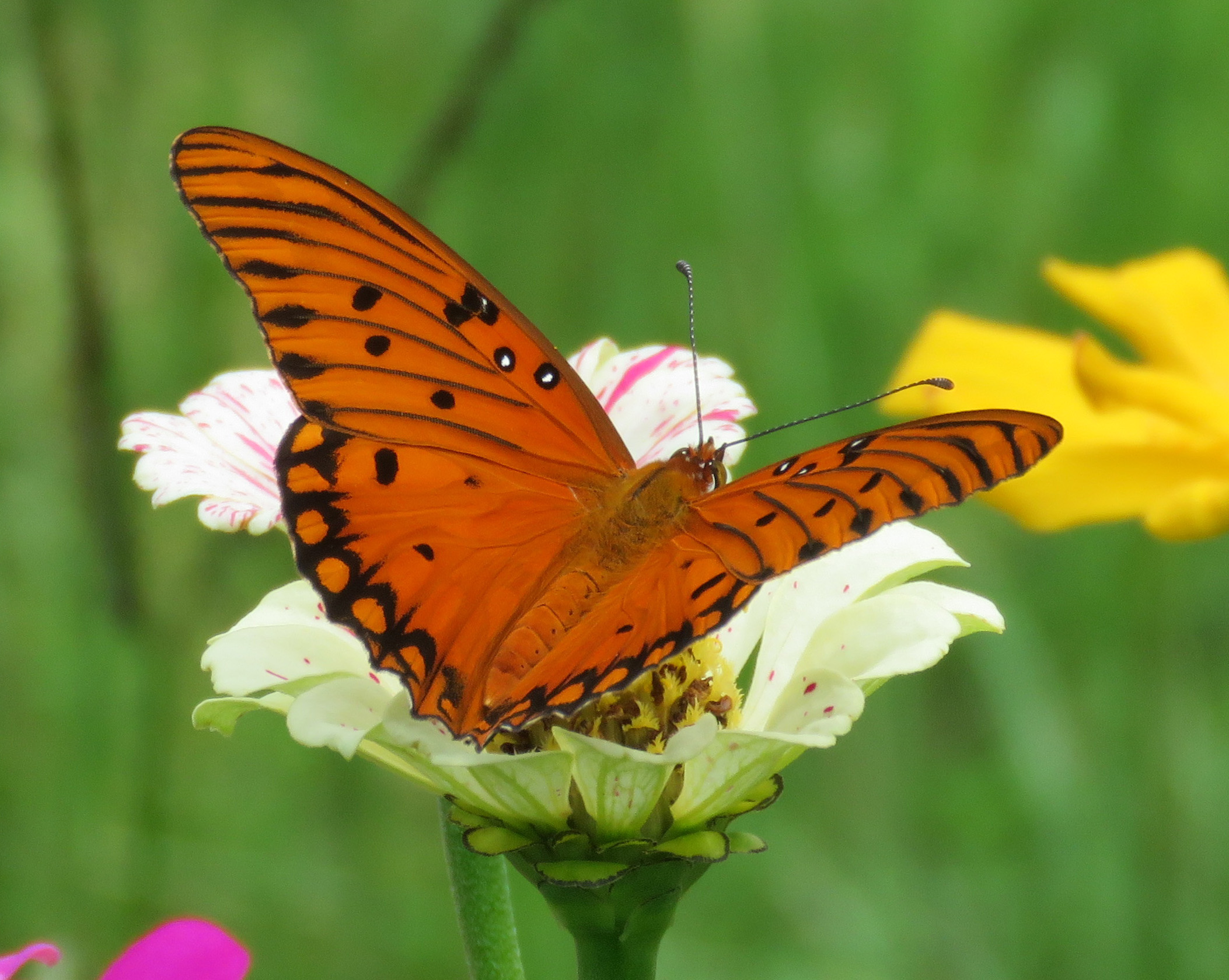
Gulf Fritillary.
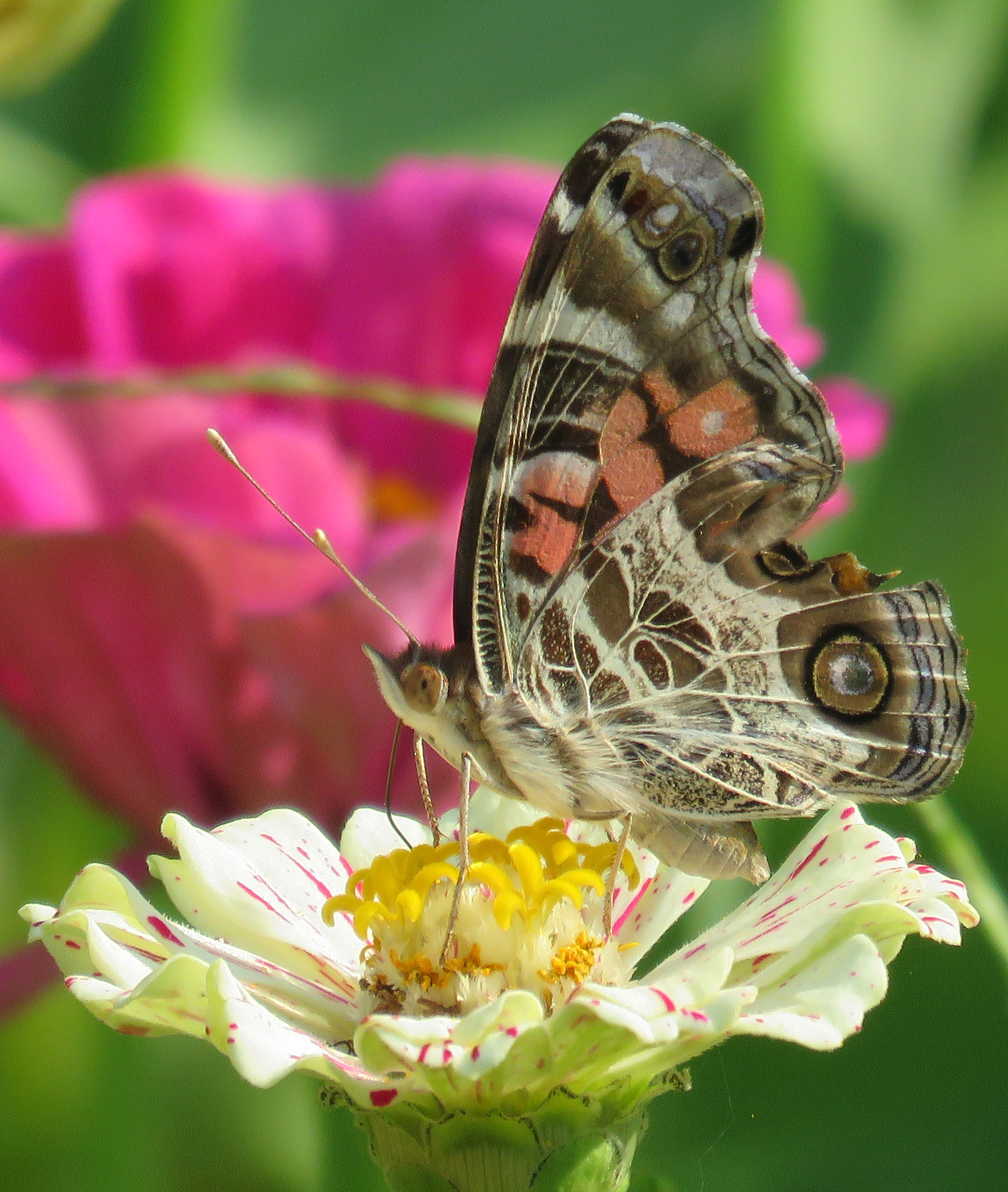
American Lady, ventral.
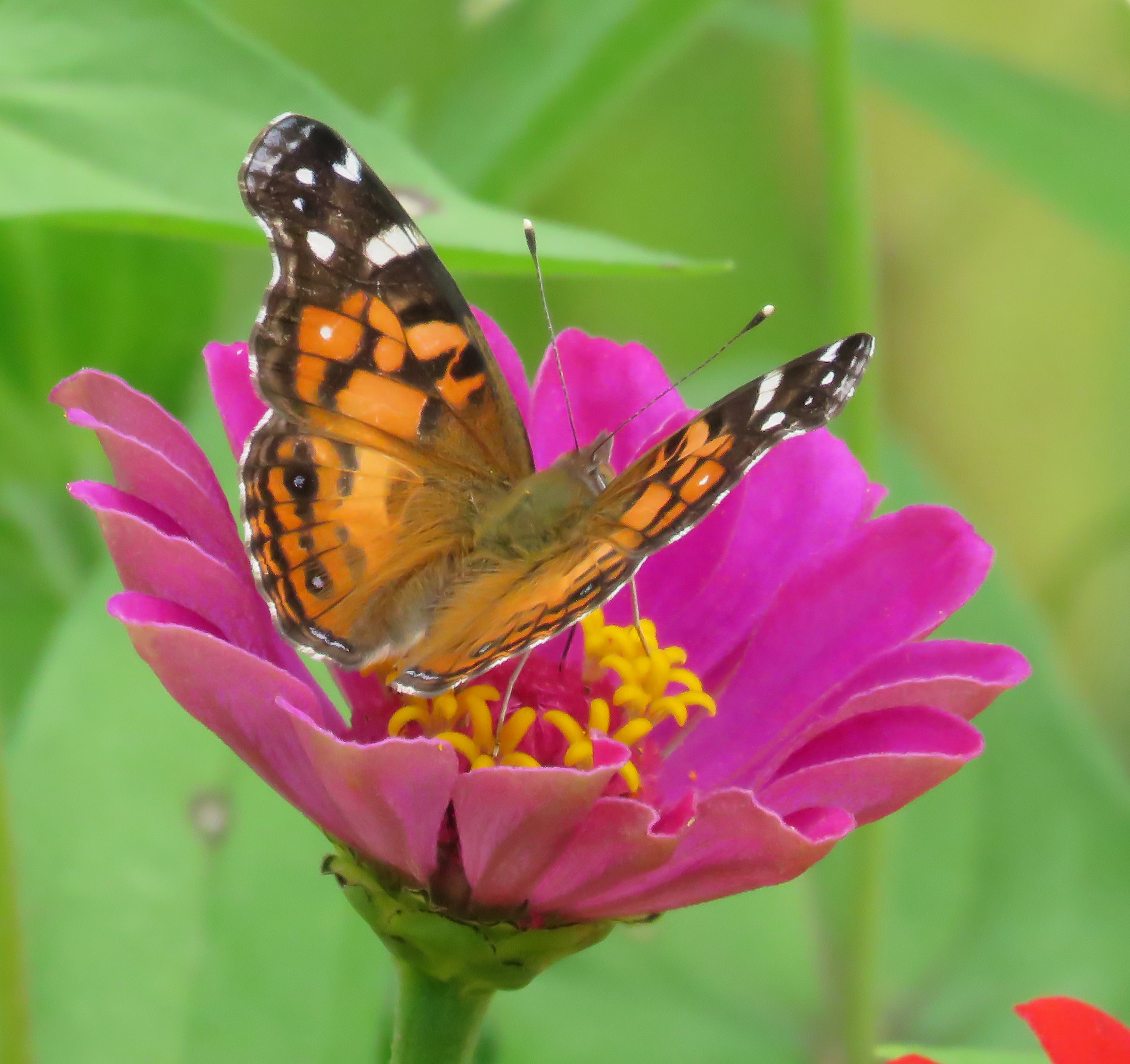
American Lady, dorsal.
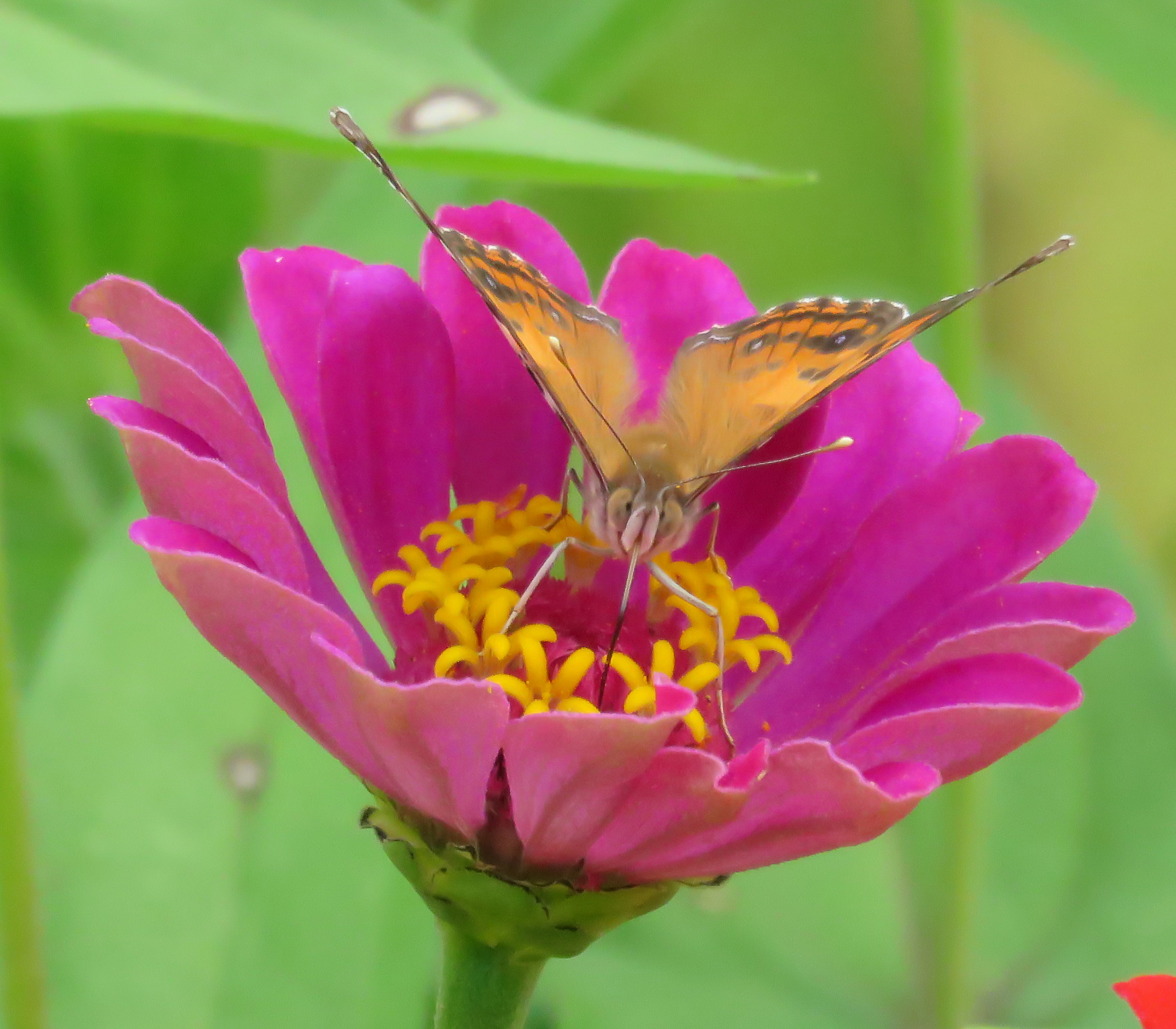
American Lady, nectaring.
White-striped Longtail on zinnia.
Buckeye.
Gulf Fritillary.
American Lady, ventral.
American Lady, dorsal.
American Lady, nectaring.


It is time for the reveal day of a little art quilt. Our online group The Endeavourers sets quarterly themes to spark our creativity, and this time the theme was “Favorite Book.” My favorite non-fiction book is Pilgrim at Tinker Creek by Annie Dillard. It is a book about observing and reacting to nature, and […]

I have tons of vintage jewelry and I am always looking for ways to get it out of boxes and out where I can see it. I have seen beautiful shadow box assemblages on YouTube and I finally created two for myself. (I photographed them without the frame and glass.) I bought very basic shadow […]

I have been writing this textile blog for 14 years, but recently my husband pointed out that so far I have failed to report on large areas of weaving history. From pterodactyls to Hollywood movies, weaving is the thread that binds it all together, as he is now ready to mansplain: I am here to […]

This is part five of my series on Thomas Fox, who was an English serge manufacturer in the late 1700s and early 1800s. His biography is called Quaker Homespun, and it is all online at archive.org. In April of 1783, Thomas married Sarah Smith of London. They went on to have 16 children, 9 of […]

This is part four of my “book report” on Quaker Homespun, a biography of Thomas Fox, a wool cloth manufacturer who lived through the Industrial Revolution. We won’t go into any specific machines that he used, but we will look at the difficulties he faced, many of which have parallels in our own times. Thomas […]
Great shots!
Thank you! I have been paying a lot of attention to the things you say in your posts, in reference to interesting backgrounds! Before, I thought of my photos just as reference materials, mostly to document what I saw, but possibly to use in an artwork where I could just make the background look however I wanted. Now I am trying to get interesting backgrounds in each picture. So thank you for sharing information!
You are welcome. Many people believe photography is an art form.
Oh, of course I know it is. I must not have expressed myself well. What I was trying to say is that while I don’t aspire to become a really great photographer, and look at my photographs just more as a record of what I’ve seen, I am now trying to make those records more visually interesting in a stand-alone way. I make art quilts and use them as reference material for those too. Because I am so involved with the textile world, I don’t foresee also taking the time to learn to really understand all the camera functions, etc. to get to the level of art photographer. Sorry for this long answer but I hope this explains what I was trying to say.
I have always loved the textile museums I have visited, India, Peru, etc. Sorry if I misunderstood. What I think makes a difference for some is thinking, as you say,about making a photograph rather than taking a photograph.
Not “just” pretty pictures at all–these are gorgeous! The colors and shapes and variety make me feel almost drunk!
Great pics…you must live in the perfect area for all these beautiful butterflies to stop by…
They are usually widely scattered but I have planted one bed of zinnias where they gather more densely, for easy photo ops! 🙂