A Couple of Herons: Birds of the Week
In the evenings, I like to go sit by our little pond and see what shows up. Recently, I was just settling into place when one of the dogs startled a Green Heron that had been wading nearby.
It flew up in a pine and preened, then it flew back down and waded along the north edge of the pond.
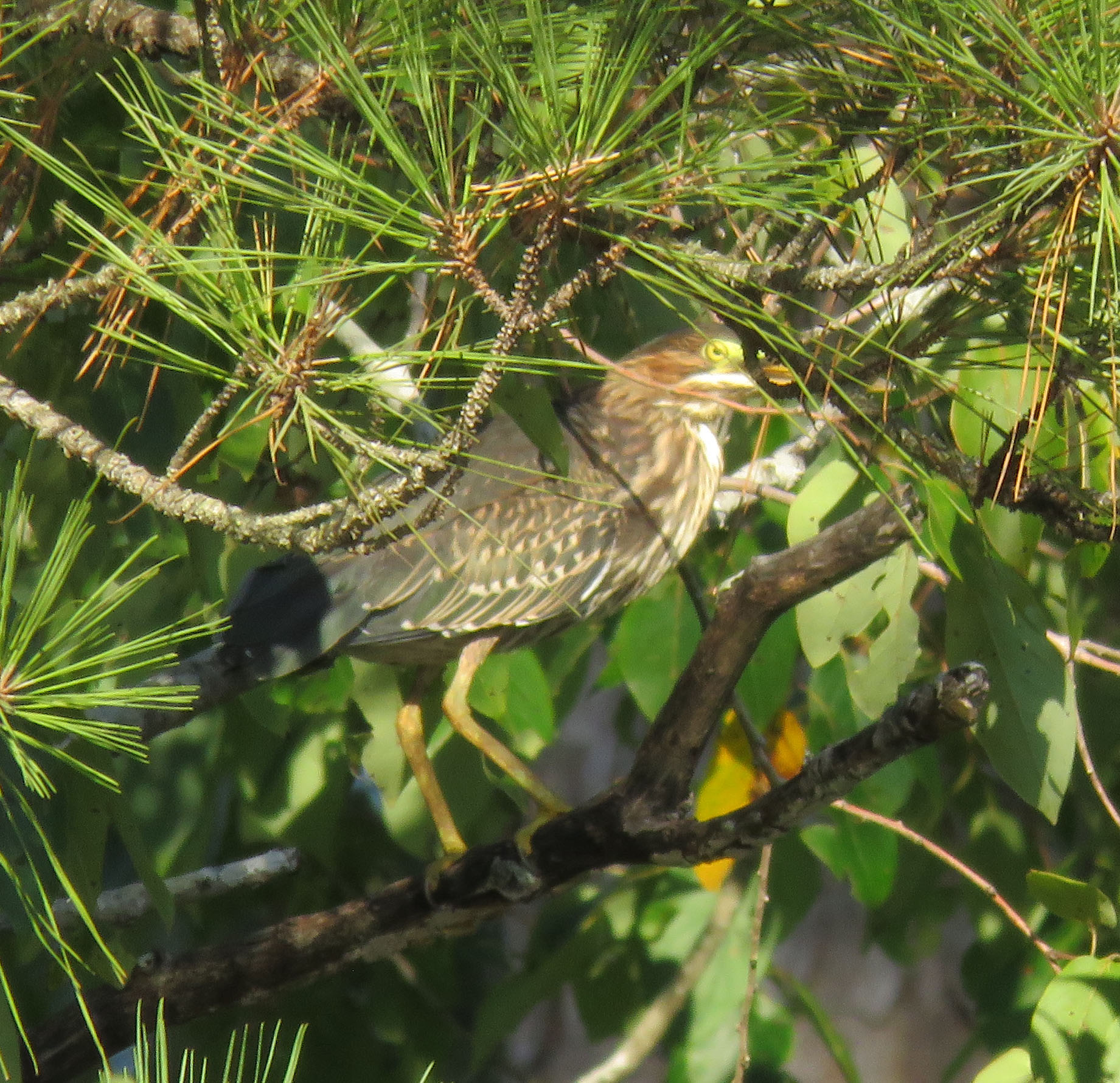
Green Heron in a pine tree.
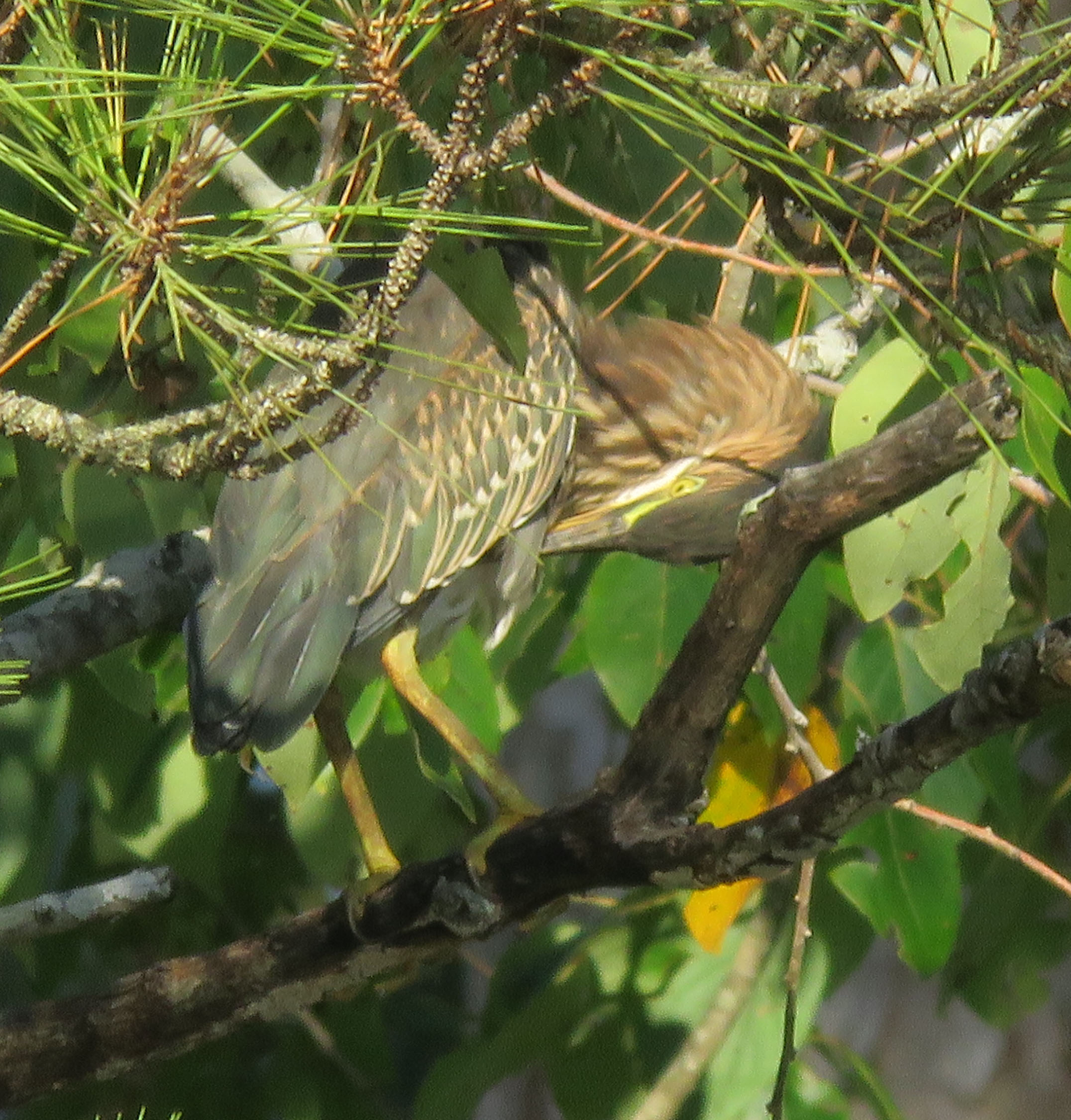
Preening.
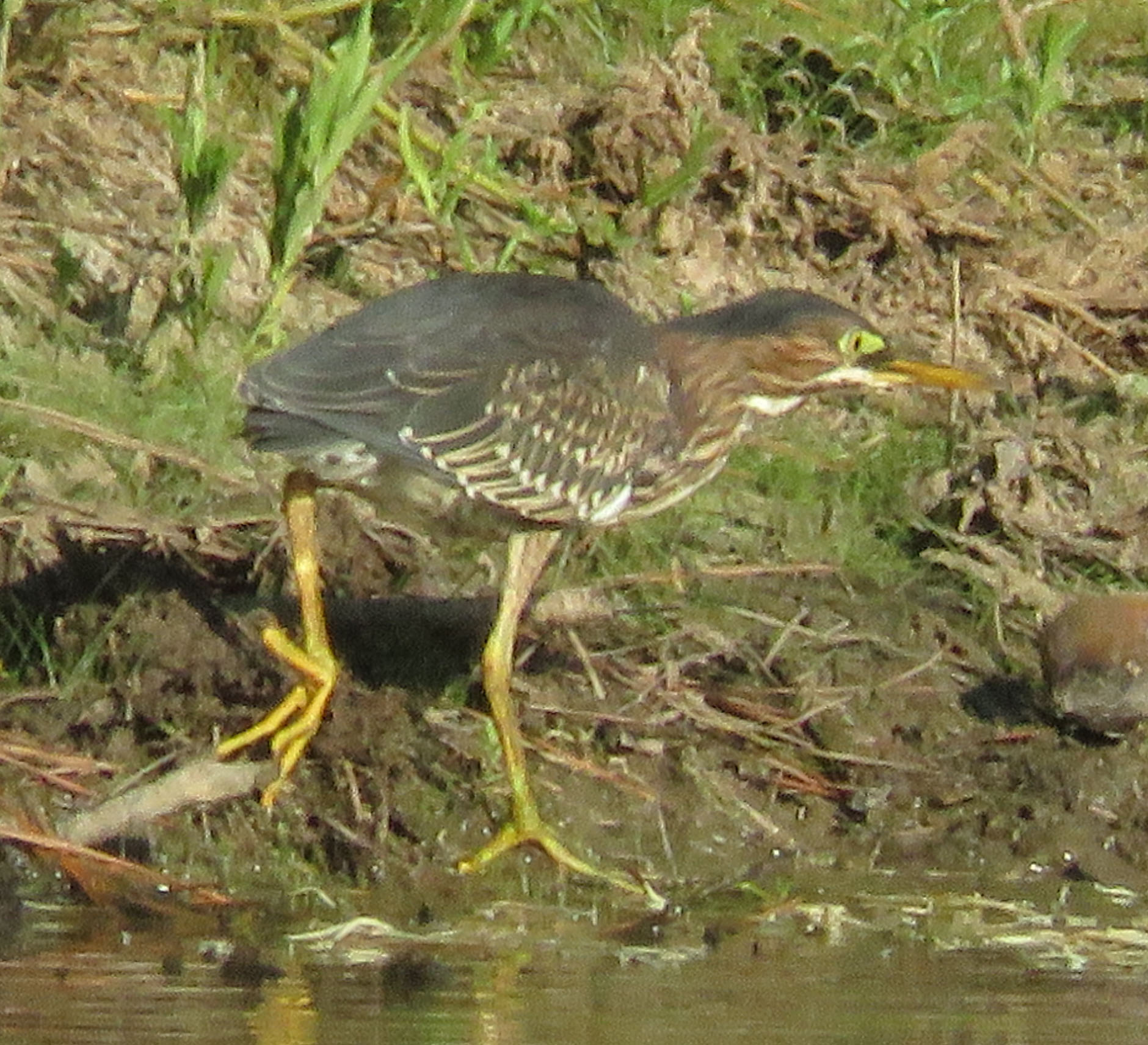
Stalking slowly.
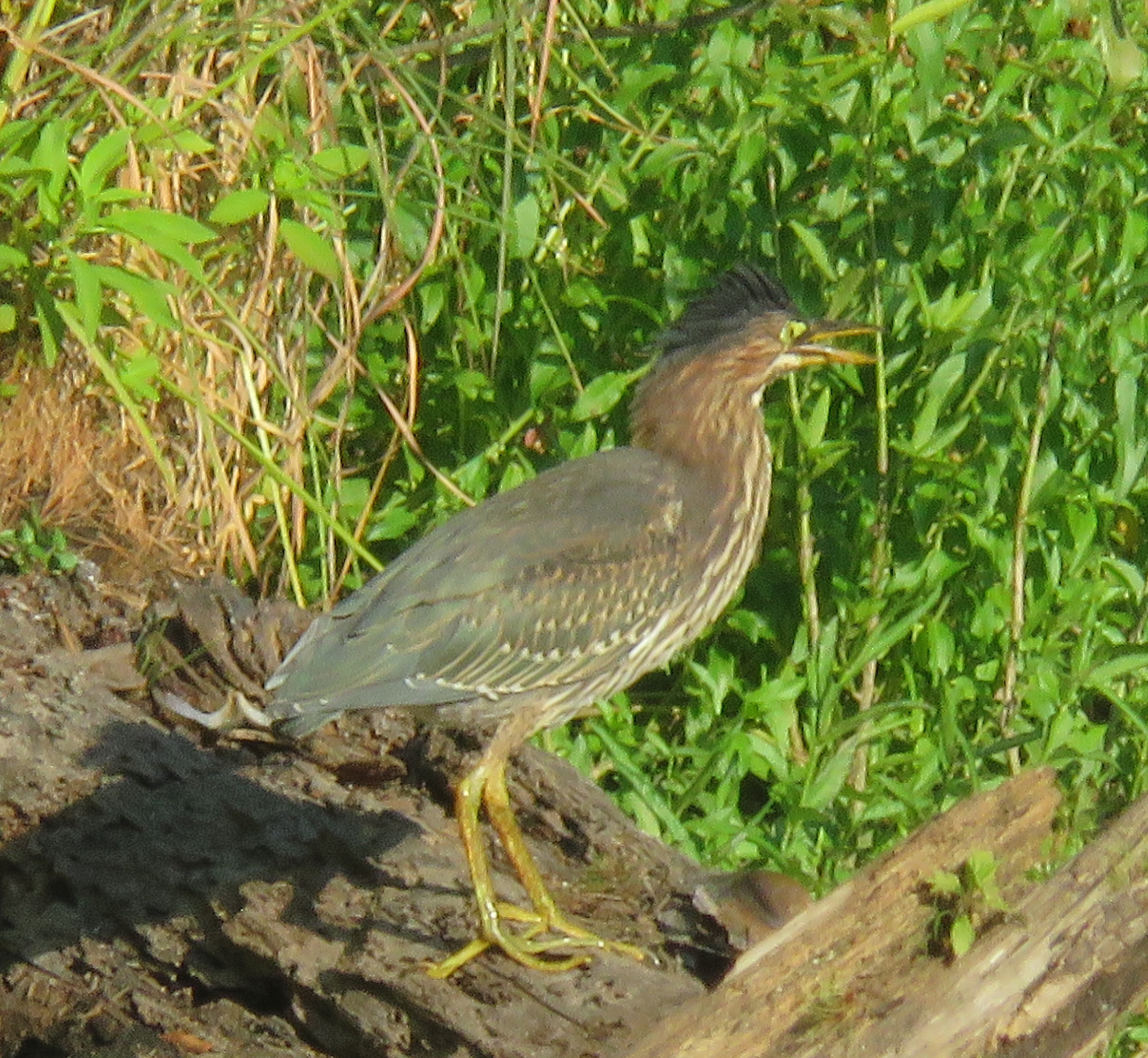
Calling from a log.
A Little Blue Heron was wading along the south edge, and eventually they met up on the east side.

Still seemingly oblivious of each other.

The Green gathers itself to fly off.
The Green flew off back to the north edge, and craned its neck to get a good look at the other bird. It is such a rumpled-looking bird, especially compared to the very smooth Little Blue.

Stretching up for a good look.

Back to work, hunting for food.
The Little Blue kindly flew over to me on the west side, allowing me to get some pretty good shots.

Little Blue Heron
When a Little Blue Heron (Egretta caerulea) shows up here, it usually appears every day for a week or two, and then we will go months without seeing one at all. They are white when they are immature, and turn blue as they grow up. I only have one picture of a bird in its “calico” phase when it is white with some blue feathers.

Little Blue with blue feathers, June of 2011.
Here is a picture showing a Little Blue with the domestic ducks we had at the time, so you can get an idea of size.
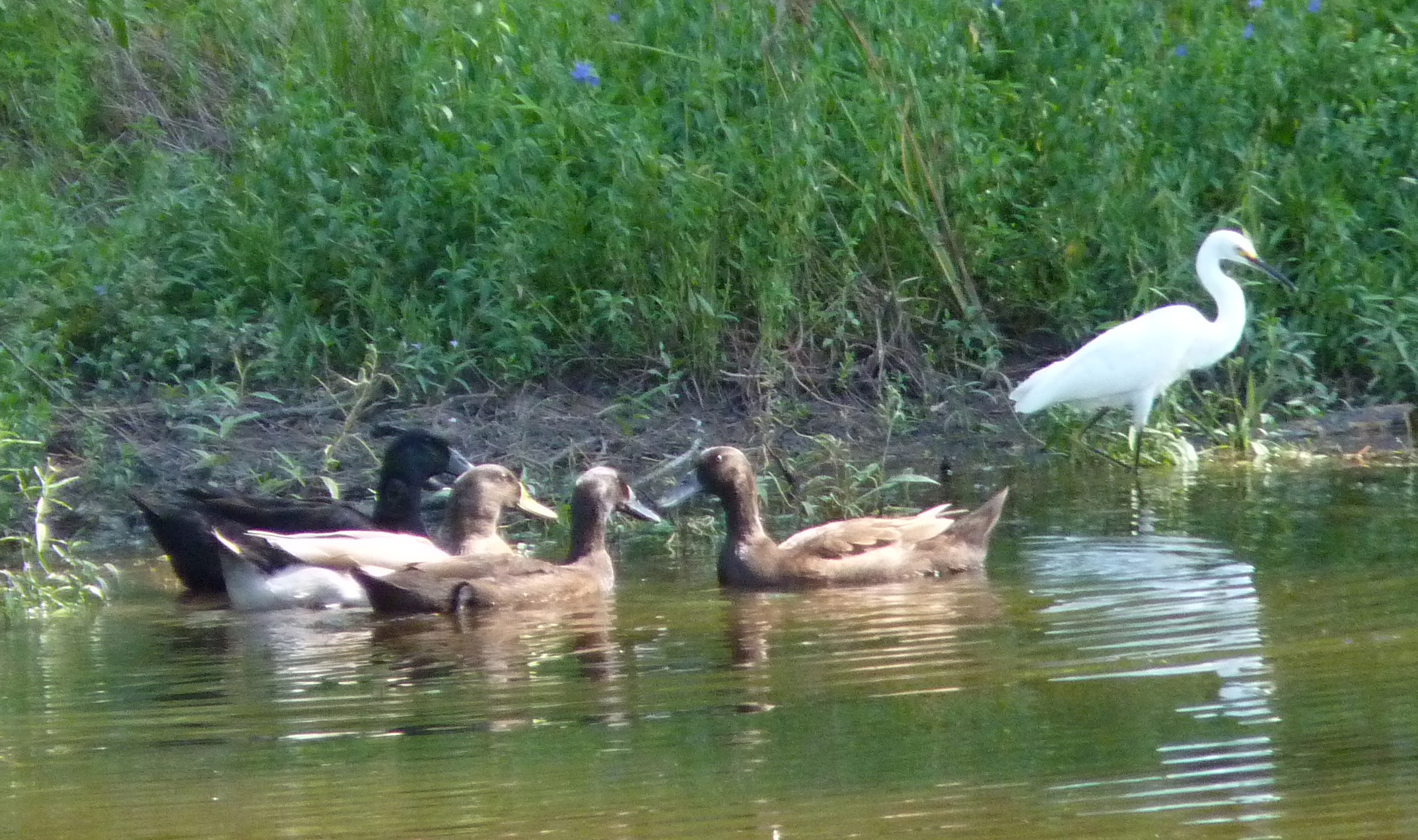
Little Blue Heron with domestic ducks. They look like they are deciding whether to let him eat lunch with them or not. 🙂
The mature birds show up here April through June.
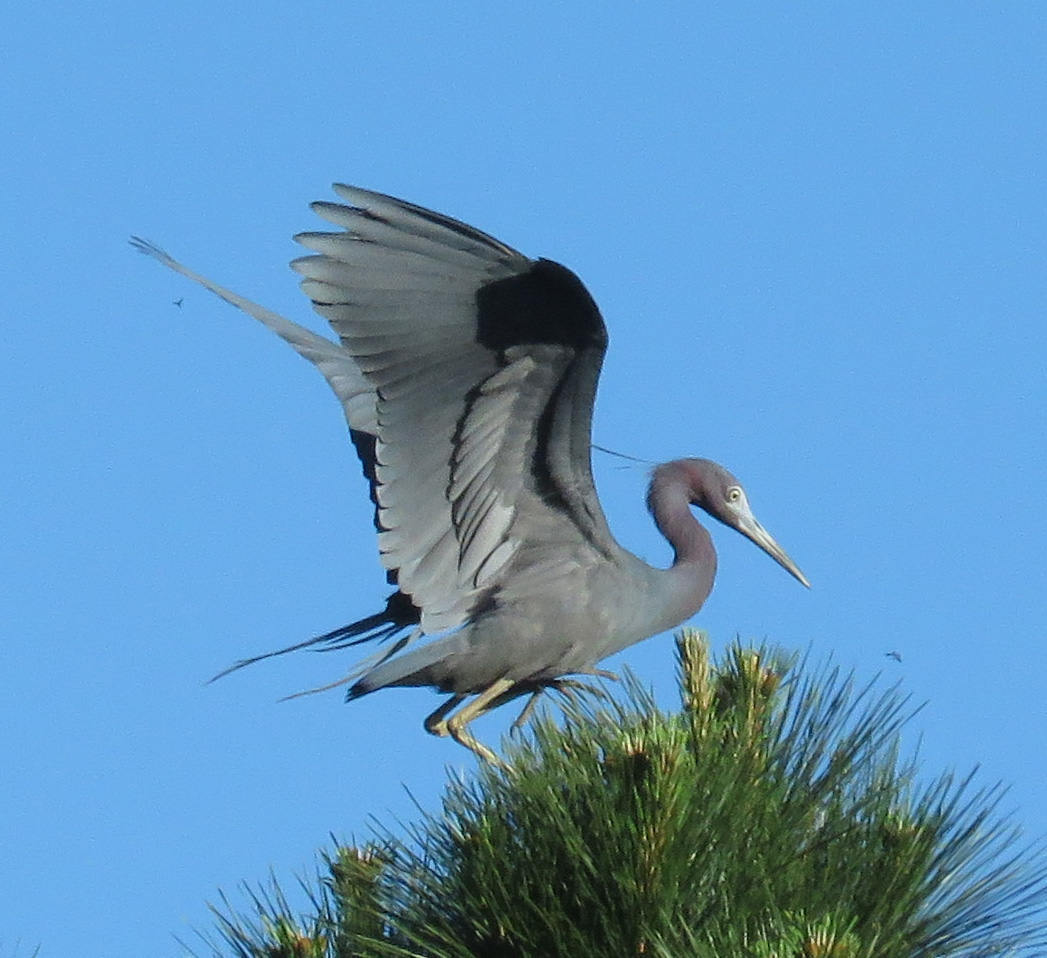
Little Blue Heron in the top of a pine.
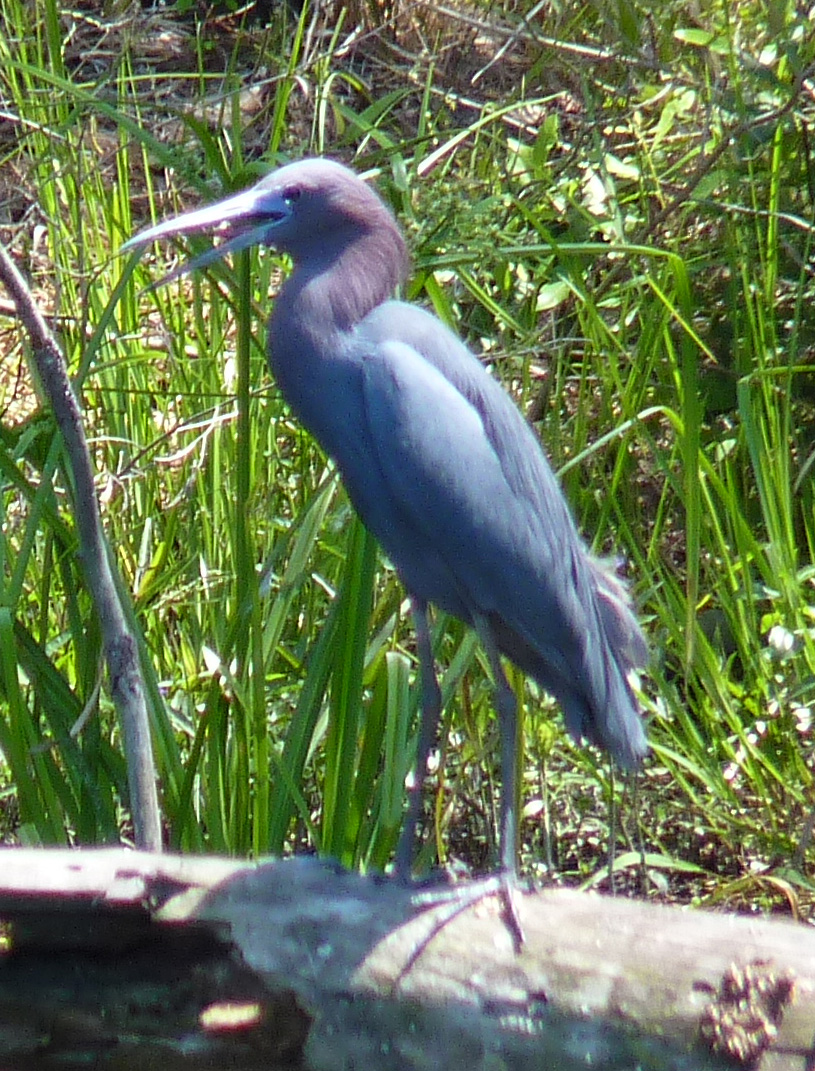
Little Blue on the pond’s edge.
Green Herons (Butorides virescens) visit much less often, maybe for a few hours, a couple of times a year. Its range in North America is much larger than the Little Blue Heron’s — maybe it just has more places to go than our pond! 🙂
The best picture I ever got of one was at the South Padre Island Birding and Nature Center in March of 2020. The birds there are very used to humans, and there are boardwalks through the wetlands, so you can get close and take great pictures.

Green Heron. In this picture you can see the beautiful patterning on the wings.
Supposedly Green Herons will take a feather or leaf and place it on the surface of the water, which attracts fish that they then catch! I have not seen this behavior, but I will be watching for that the next time I see a Green Heron!
I am joining in with I. J. Khanewala’s Bird of the Week. I think you are meant to do just one species at a time, but when a second species photo-bombs your featured species, what are you supposed to do? You have to put it in the post too. 🙂


The difference between the stalking and the stretching is amazing. It’s almost like they aren’t even the same bird. Although, honestly, in neither pose is it especially attractive. Rumpled is a very apt description.
I know, it is amazing how much they can angle and curve their necks. If I didn’t see it for myself, I too would probably think they were different species.
Great photos. I enjoyed its adventure around the pond 🙂
Thanks, Brian, I don’t often sit and watch bird behavior, but the light was great, their actions were easy to see, and my camera battery was charged! 🙂
All things were just perfect indeed 🙂
I know one other place the green herons like to hang out — the marinas where I do my work. They perch on the dock lines, which often hang just above the water and provide a great fish-catching spot. I’ve seen them using tools, as well. Feathers, twigs, tiny fish all can serve the purpose. I was surprised to see ‘rumpled’ in your description, though. The ones I see are quite sleek, unless they’re in the process of preening or shaking their feathers. Granted, the youngsters can seem poorly put together, but teens of every species can be awkward!
That is so cool that you have seen them using tools! I hope I see it someday.
I concede your point about them being sleek — at least from the back. This one just looked so bedraggled from the front and it hit me as a huge contrast to the Little Blue. 🙂
Love the stretch! My favorite photo though is the last one; herons have such intense eyes, especially when hunting. Great shot!
Thanks! I felt really lucky to be able to get so close to one, thanks to that great boardwalk. 🙂
Wonderful photos of herons in all their search for food.
Lovely photos of these beautiful birds. Always nice to see wildlife.