Nature Photo Challenge #24: Edibles
I once went to a talk by a soil expert. He said, “In Texas, there are six types of soil that are good for growing crops. In our county, we have none of them.” 🙂 So although we often try to have a little summer garden, it is a good thing we don’t have to be self-sufficient! There are some wild plants in the woods that we can forage, and we have one dependable pear tree, but even those have their good years and bad.
Starting in April, we have Southern Dewberries, which are a tart blackberry that grows on thorny, spreading vines. Every year I think, this year we will have a bumper crop! But as they ripen and get heavy, they droop down under the leaves, making them hard to find. And that is about the time of year that the snakes get active, so I am reluctant to rustle around near the ground. But sometimes I get enough to make a cobbler.

Southern Dewberry, Rubus trivialis, April 2014
In June and July, we have Mustang Grapes. They are pretty sour, but that’s what makes them perfect for homemade jelly, because it ends up tasting fruity instead of just sugary. The vines grow up in the pine trees, and the deer eat the ones that grow down low. So when we go out to pick them, we have to put put a step ladder in the back of the truck, so we can get to the grapes too high for the deer. One year we rented a cherry picker to do some tree work, and we took advantage of having it to pick grapes that would normally be out of our reach.
The grapes are only productive about every third year, but that is enough to keep me in jelly until the next good year, and if you are interested in that process, I wrote about it here.

Mustang Grape, Vitis mustangensis

Mustang Grapes

A cooler full of grapes to process.
Usually, starting in July, we have American Beautyberries. These bushes grow scattered throughout the woods, growing as tall as a person each year, and then dying back in the winter. The leaves have a very light lemony scent that makes a great natural insect repellent. The berries are bright fuchsia, and they taste citrusy, but they are very small, and there is very little flesh around the seed, so the texture is mealy. I like them for a seasonal snack as I walk, but I don’t think you could fill up on them. This year it has been hot and dry and the berries are not forming.

American Beautyberry, Callicarpa americana
(We also have plants with similar berries, that are not edible, and could make you very sick! And if Denzil ever does a challenge on “Inedible,” I will post them there. But I just wanted to caution you that if you are ever walking in the woods, don’t just eat any berries you see.)
Starting in August, the Prickly Pear tunas (fruits) are ready. You can eat them as is (peeling them carefully) — they taste like strawberries with lots of seeds. Or you can make jelly from them. You can also eat the nopalitas (cactus pads), which are more or less like cucumbers. I love them, but I usually buy the commercially canned ones, so I don’t have to worry about thorn and glochid removal. Prickly Pears can be found in a few places on our farm in East Texas, but they flourish in the more arid sections of Texas, so we pick them at our place in Central Texas.

Prickly Pear, Opuntia spp, Central Texas.
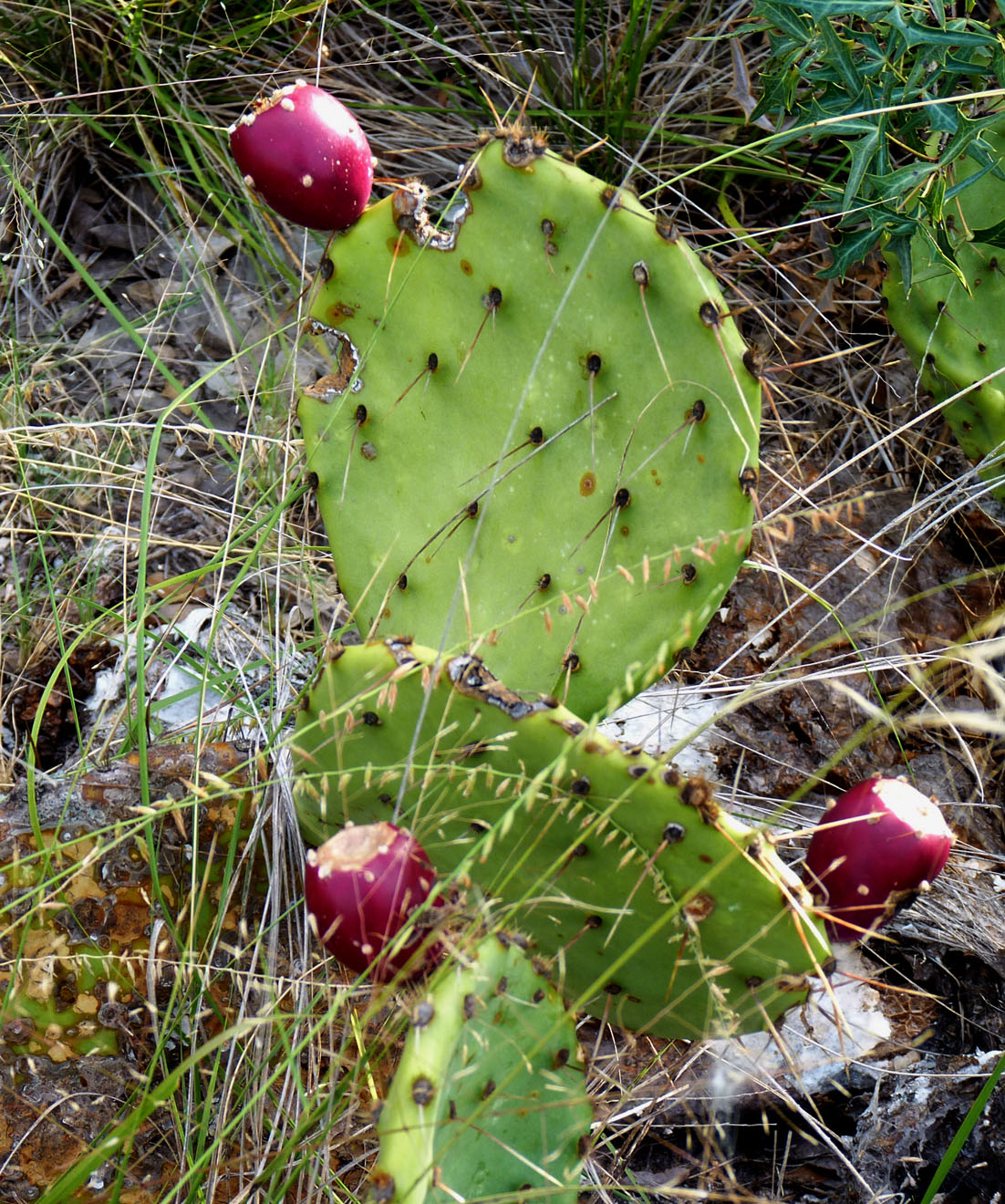
Someone has found this Opuntia edible — probably a feral hog.
Another wild edible found in Central Texas is the Texas Persimmon, and they are also ripe starting in August. They are about an inch in diameter, with a delicious custard flavor, but the skins are pretty tough, and there is just a small layer of flesh around the giant seed. So they make a nice seasonal snack as you are walking around, but they don’t make for refined manners (spitting is required). 🙂
They are a great indicator plant for how well the Whitetail Deer are doing in a given year — if there are lots of persimmons to be found, the deer are finding enough to eat.

Texas Persimmon, Diospyros texana

Texas Persimmon, Diospyros texana
Back at our place in East Texas, we have one Asian pear tree, that drops its fruit in October. These pears are very crunchy and astringent, and once they are off the tree, they don’t last long. But they make great canned pears, and I put up as many as I can. Last year our neighbors wanted to learn how to can, and we had a fun Pearapalooza Party. Here is part of the invitation letter my husband “pre-peared”:
Pear ye! Pear ye! A Proclamation of the upcoming Peara-Palooza!
We appeal for your participation in our proposed pear processing party in October. It appears that our pear tree will have a plethora of pears for picking. We predict that there will be plenty for each participating family to partake of.
Prior to the processing party we plan to publicize the date so participants can appropriately prepare for the program. Please procure an appropriate pear peeler and plenty of processing apparati (jars and lids). Precise application of proper processing procedures will proportionally lower the percentage of product that might putrefy from poor packaging.
…
Remember: The only thing we have to pare is pear itself – Roosevelt
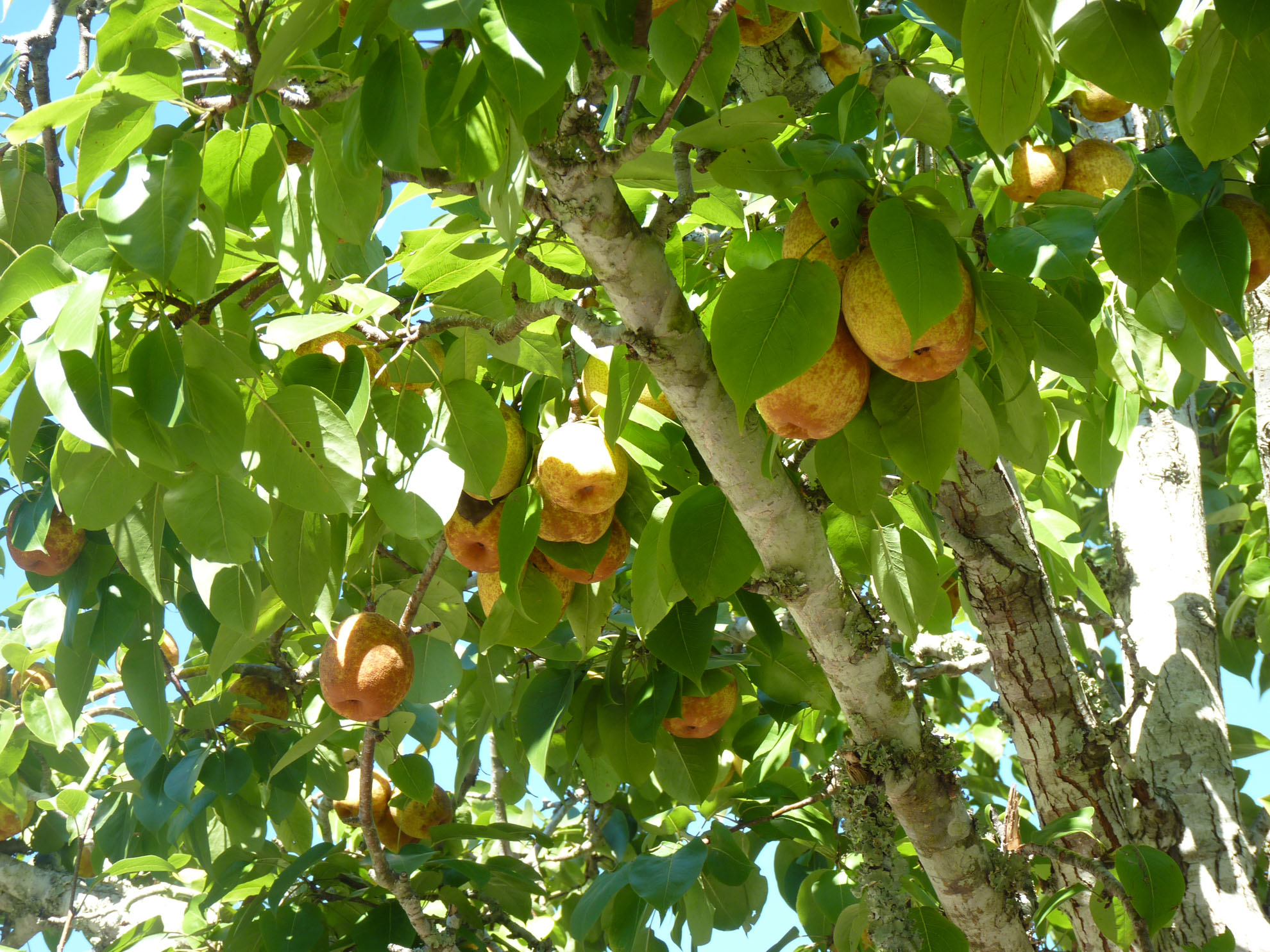
Pear tree, unknown variety.
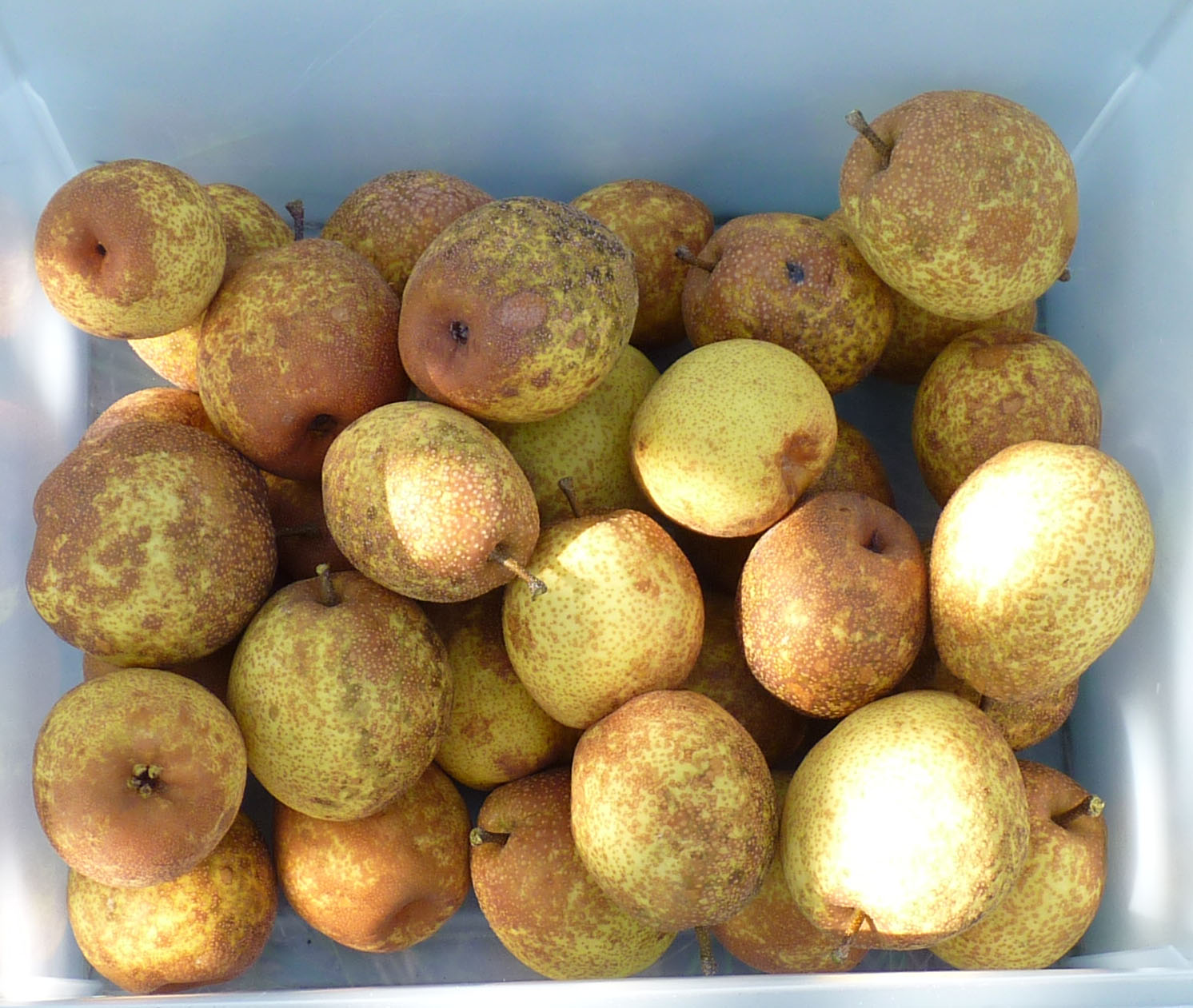
Crate of pears.

Speckled crunchiness.
He also created a “pear-fect” play list:
- The Police: Every pear you take
- Tom Petty: The peeling is the hardest part
- Bob Seger: Beautiful peeler
- Jackson Browne: Here comes those pears again
- Smokey Robinson: The pears of a clown

Part of the most recent pear and grape crops.
Our last wild edible of the year is the Common Persimmon here in East Texas, which finally ripen in November.

Common Persimmon, Diospyros virginiana
Like the Central Texas persimmons, these are about an inch in diameter, and they also taste like pudding. But their skins are papery and full of tannins, and the seed is a huge percentage of the fruit, so again, they make for a fun seasonal snack, but I don’t harvest them and cook them, I leave them for the wildlife. For a wonderful description of how to tell when they are ripe enough to eat, please check out this post from Grackle and Sun — I think of it every time I am wondering if I want to try the persimmons yet or wait a little longer!
This look at some of the edible plant bounty around us was sparked by Denzil Nature’s photo challenge of the week, Edibles. Drop over and get inspired by the beautiful healthy choices, and if you have any photos of plant edibles, please share!



What a cornucopia of fruits you have!
What a wonderful feast! Thanks for these, and “inedible” yes that could be an interesting theme!
What a selection! I’ve never seen anything like those beautyberries.
I was just watching a show called The Secret Life of Plants, and they mentioned a Japanese Beautyberry which I had never heard of — I looked it up and they look about the same, maybe with a smaller leaf. I love the color of the berries. 🙂
It is an amazing colour that you don’t often see in nature.
Pingback: Your Edible photos – Denzil Nature
A great collection, I especially like “your” Prickly pears”. They remind me of Malta where I used to live, these cacti were growing everywhere 😀
The American Beautyberries are very colorful.
I noticed “your” prickly pears as well, but I couldn’t read the captions to be sure what you were saying about them. 🙂 I have not traveled much but one place I have been is Greece, and I was so surprised to see prickly pear there — I looked it up and it is native to the Americas but was introduced all over the world in the 16th century. It is a fascinating plant!